Why do all Investor prefer CMHC MLI?
Why CMHC MLI Select Could Be the Smart Route for a Calgary Multifamily Investor
For the right investor, CMHC MLI Select can dramatically change how a development deal is financed. Instead of tying up massive capital in a conventional structure, an investor may be able to enter a qualifying rental project with far lower equity, longer amortization, stronger cash-flow flexibility, and a more scalable path into multifamily ownership in Calgary.
The simple investor explanation
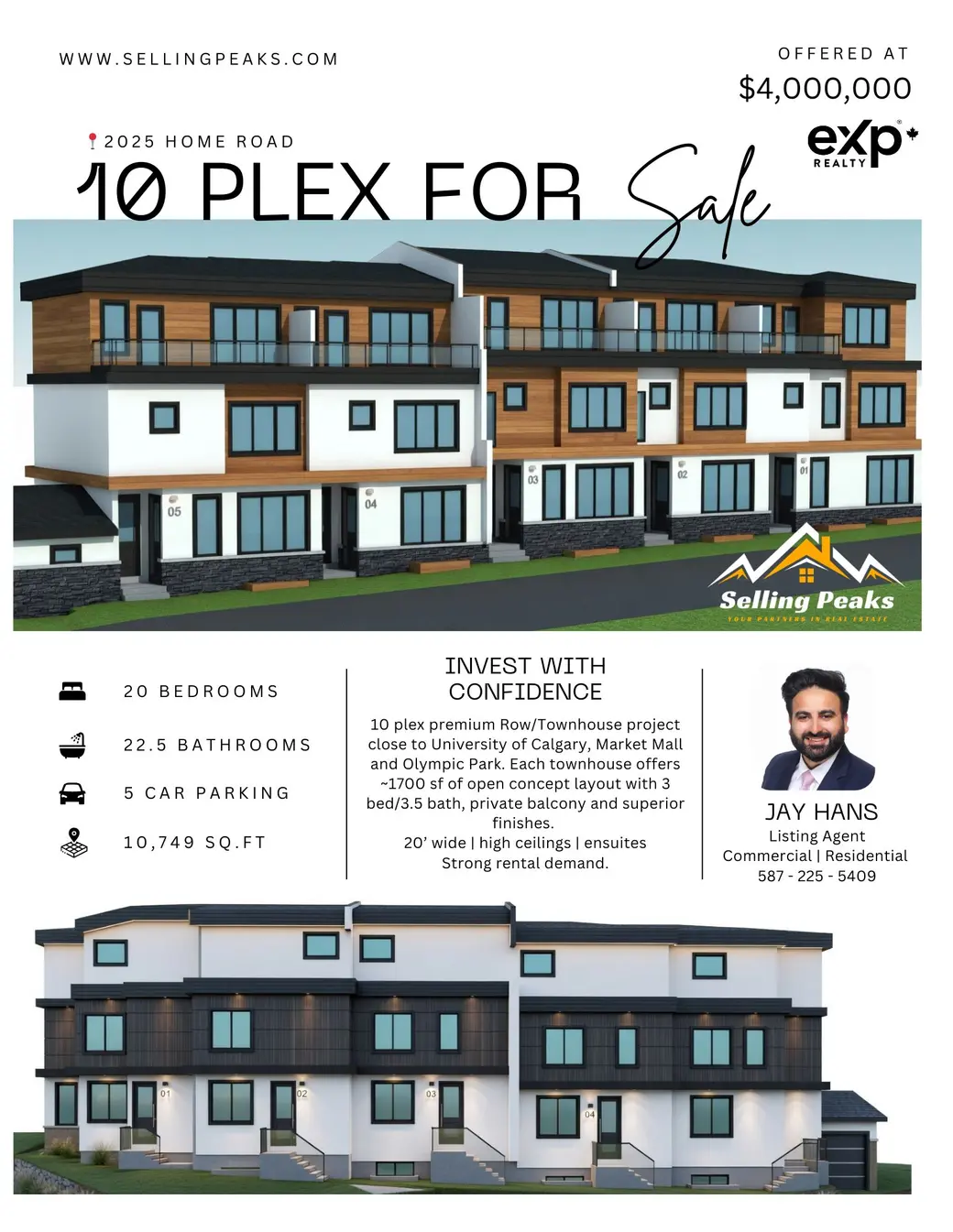
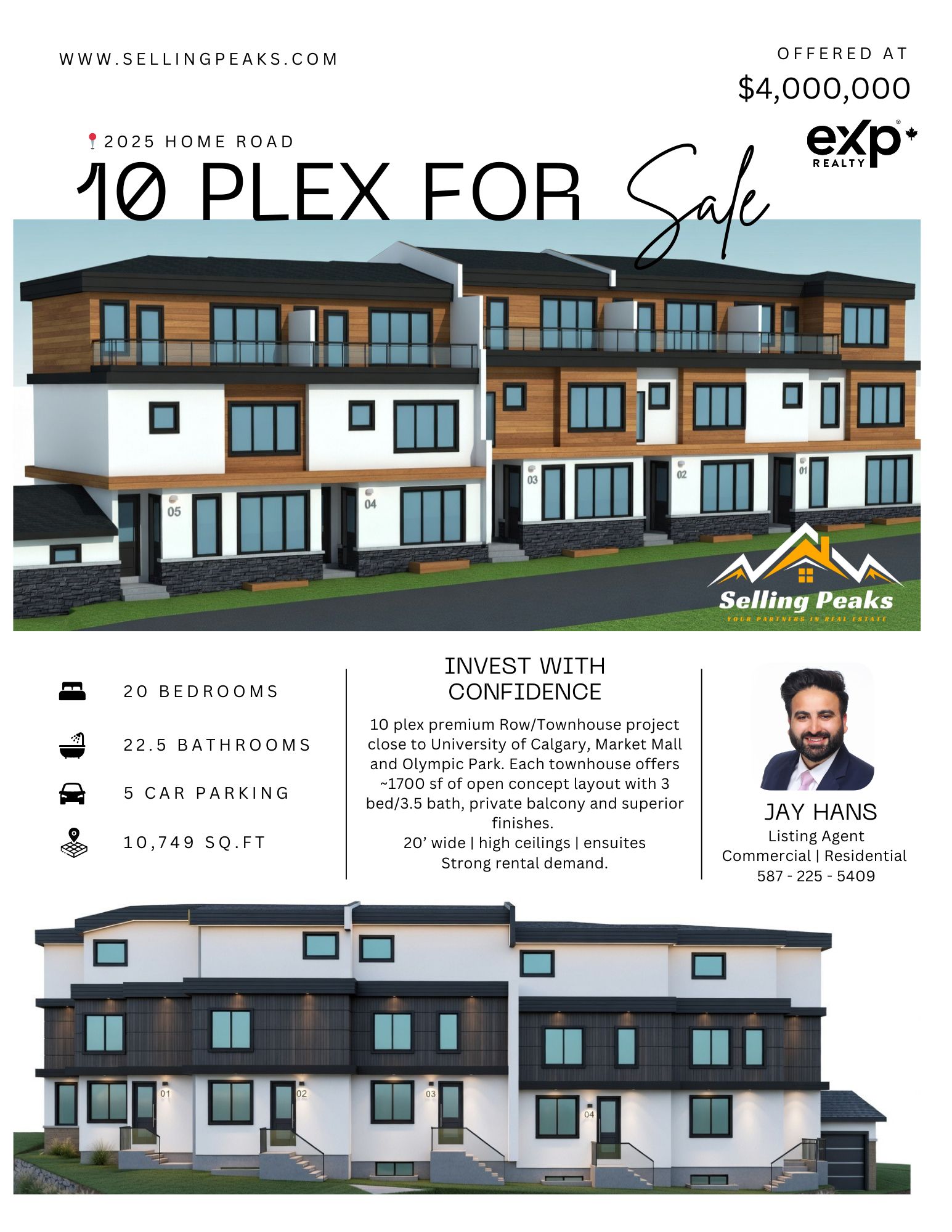
Let’s say an investor is looking at a $4 million Calgary rental development opportunity. Under a conventional structure, they might need to bring in a very large equity cheque. Under a qualifying CMHC MLI Select structure, the conversation can look very different.
In an ideal qualifying scenario, the investor may be able to finance up to 95% of the total project cost. That means the initial equity requirement may be only about $200,000 on a $4 million project. That is where the opportunity becomes powerful: instead of locking away huge capital in one deal, the investor keeps more liquidity available for reserves, future acquisitions, tenant improvements, leasing, and scaling.
But this does not mean the project is automatic. The investor still has to qualify properly. A lender and CMHC will look at the borrower’s net worth, experience, project viability, rent stability, documentation, and social outcome commitments. In practice, the investor should think of MLI Select as a serious professional structure, not a shortcut.
What the investor is really putting in
Illustrative capital stack
- Purchase / development cost: $4,000,000
- Illustrative insured financing at 95%: $3,800,000
- Illustrative equity/down payment: $200,000
- Indicative borrower net worth target: about $950,000
Illustrative monthly mortgage range
- At 4.75%, 50-year amortization: about $16,592/month
- At 5.25%, 50-year amortization: about $17,931/month
- These are example payment ranges only and exclude items like taxes, insurance, reserve allocations, and management.
How much rent can a $4M investment generate in Calgary?
This depends heavily on the product type, unit mix, location, parking, finish level, and whether the project is a 6-storey apartment concept or a townhouse / duplex-style rental product. There is no one-size-fits-all rent answer.
A useful way to explain it to investors is to separate citywide average rent from subject-property target rent. Calgary’s broad purpose-built market average for a 2-bedroom unit is lower than what a new, well-located, properly designed project may try to achieve. So the citywide average gives a conservative anchor, but the actual underwriting must be based on a professional market rent study for the exact product.
Conservative illustration: if a project had 10 rental units at an average of roughly $1,900 per month per unit, gross annual income would be around $229,000 to $230,000. After operating costs, that may be too thin to comfortably support a highly leveraged $4M structure.
That is why the investor has to look beyond the headline “5% down.” The real question is not only how little equity can go in, but whether the project’s stabilized rent roll is strong enough to satisfy lender underwriting and support healthy cash flow.
In many cases, the better use of MLI Select is where the project creates a stronger rent profile through the right unit count, right bedroom mix, right neighbourhood, right design, and right affordability / efficiency positioning. The structure works best when the rental story is already compelling on its own.
How much may come from the investor’s pocket after closing?
This is where many investors need clarity. A low down payment does not guarantee zero monthly top-up.
If the project’s monthly rent collection is not high enough, the investor may still need to support the building during lease-up, stabilization, or early operations. That support may include covering:
- operating shortfalls during initial occupancy,
- interest carry or soft costs during construction,
- marketing and leasing costs,
- property taxes, insurance, repairs, and management,
- reserve requirements and unexpected overruns.
For example, if the debt service is around $16,500 to $18,000 per month, the project still needs enough rent after expenses to comfortably service that debt. So the investor should treat the down payment as only one part of the capital picture. Smart investors also keep working capital and contingency capital available.
Why this can be the better investor choice
1. Lower capital lock-up
Instead of burying a large amount of cash in one property, the investor can preserve liquidity and deploy capital more strategically.
2. Longer amortization
Longer amortization can reduce monthly debt pressure and improve cash-flow flexibility, especially during the early years of the project.
3. Stronger scalability
A well-structured CMHC-backed deal can help an investor move from small ownership into larger multifamily holdings with a more institutional financing approach.
4. Better fit for Calgary’s rental market
Calgary still offers relative affordability, continued rental demand, and active housing delivery, making the city a serious market for disciplined multifamily investors.
5. More attractive than a purely conventional structure
If the project qualifies, the combination of higher leverage, longer amortization, and an insured financing framework can create a materially better capital stack.
6. Social-outcome driven value
The project is not just chasing leverage. It is aligning with affordability, accessibility, and climate goals that can strengthen financing outcomes and long-term marketability.
How the investor can do it step by step
Step 1 — Identify the right site or project. The property has to make sense as a rental asset first. The location, zoning pathway, product mix, and achievable rents all matter before financing is even discussed.
Step 2 — Build the right concept. Decide whether the project is best positioned as multifamily apartment units, townhouse rentals, duplex-style rental stock, or a hybrid approach. Then shape the unit mix around real Calgary demand.
Step 3 — Decide the MLI Select scoring strategy. The investor and advisory team should determine how the project will earn points through affordability, accessibility, and/or energy efficiency. This is critical because the score affects financing flexibility.
Step 4 — Prepare the underwriting package. This includes pro forma rent roll, development budget, equity source, borrower profile, project narrative, and supporting professional reports.
Step 5 — Work through an approved lender. The lender structures the application and submits the insurance request to CMHC.
Step 6 — Obtain approvals and satisfy conditions. This may include covenant language, schedule commitments, energy or accessibility support documents, and lease-up / compliance conditions.
Step 7 — Execute, lease, and stabilize. The project has to actually perform. Getting approval is one milestone. Maintaining the commitments and hitting the rent roll is what protects the deal.
What had to be done for CMHC approval
To make a deal like this credible, the investor must approach it with a proper professional package. That usually means:
- a clear purchase or development structure,
- a detailed construction budget or executed purchase agreement,
- proof of equity / down payment source,
- a realistic pro forma rent roll,
- borrower and guarantor financial strength,
- a compliance strategy for affordability, energy efficiency, or accessibility,
- supporting analysis from qualified professionals where required,
- and a plan to maintain commitments after funding.
If the affordability route is used, the investor must be prepared for the compliance side as well. This is not simply a closing-day exercise. It becomes an operational commitment that has to be respected over time.
What must be kept in place to keep the deal convincing
The best investor pitch is not “you only need 5% down.” The best pitch is this:
You may be able to control a much larger rental asset with a far more efficient capital structure, while aligning the project with the exact housing outcomes CMHC wants to see — and while positioning the asset for long-term hold, stabilized income, and portfolio growth.
To keep that story strong, the investor has to maintain discipline in six areas:
- realistic rents, not overly optimistic rents,
- tight construction control and contingency planning,
- clean financial reporting and lender transparency,
- proper compliance records for the selected MLI Select path,
- strong property management and tenant retention,
- sufficient liquidity for lease-up, reserves, and surprises.
-
Position the deal correctly from day one
At Selling Peaks, we understand that investor deals are not won by marketing language alone. They are won by presenting the property properly, structuring the opportunity intelligently, and aligning the right project with the right financing path. If you are looking at a Calgary multifamily or development opportunity and want to see whether it can be positioned through a CMHC-style financing strategy, the right advisory structure matters from the very beginning.
Speak With Selling PeaksCategories
Recent Posts